Showing posts with label Science. Show all posts

Thursday, February 27, 2025

Light vs Darkness: No Contest


First John 1:5-7

This is the message we have heard from him and declare to you: God is light; in him there is no darkness at all. If we claim to have fellowship with him and yet walk in the darkness, we lie and do not live out the truth. But if we walk in the light, as he is in the light, we have fellowship with one another, and the blood of Jesus, his Son, purifies us from all sin.

Light vs Dark

What I am about to say may seem controversial, but I am convinced of its truth:

There is no such thing as darkness.

What we think of as darkness is just an absence of light. For instance, we have these magical sticks where you can press a button or click a switch and a beam of light shoots out. They are called flashlights.

However...

There is no such thing as a flashdark.

And contrary to what some movie reviews may say, there is no classic contest between dark and light. You turn on a flashlight and the beam of light doesn't struggle to get out. It doesn't have to slowly and with much effort push back the darkness.

No.

When it comes to darkness. Whenever light shows up, light wins!

*  *  *  *  *  *  *

Truth is...That's the way it is with Yahweh, too. What did John say? "If we walk in the light, as he is in the light, we have fellowship with one another and the blood of Jesus purifies us from all sin!" Let the light of God reach every remote corner of your soul and you can celebrate being purified from all sin!


Thursday, October 26, 2023

Apostles' Algorithms Are Absolutely Applicable


In order to get a springboard in creating a response to a friend's Facebook post, I went to ChatGPT and typed "Apply Acts 4:1-22 to living in current North American society."

What follows are the exact words this piece of artificial intelligence spewed out in a matter of seconds...and I'm speechless.

Image generated by LimeWire

Acts 4:1-22 in the Bible tells the story of Peter and John being brought before the religious authorities in Jerusalem after healing a man and preaching about Jesus. The authorities questioned their actions and teachings, and Peter and John boldly proclaimed their faith in Jesus Christ. Here are some ways you can apply the principles from this passage to living in current North American society:

Boldly Share Your Faith: In Acts 4, Peter and John didn't back down from sharing their faith in Jesus, even when faced with opposition. Similarly, in North American society, it's important to be bold in sharing your faith with others, while respecting the rights and beliefs of those who may not share your faith. Be willing to have open and respectful conversations about your beliefs.

Stand Firm in Your Convictions: Peter and John refused to be silenced or compromise their beliefs. In a diverse society like North America, it's important to stand firm in your convictions while also being willing to listen to and engage with different perspectives. This doesn't mean you have to abandon your faith, but it does require a willingness to engage in meaningful dialogue.

Trust in God's Power: The healing performed by Peter and John in Acts 4 was attributed to the power of God. In North American society, trust in God's power can provide a source of hope and strength. It can also inspire you to engage in acts of compassion and service to others, just as Peter and John did through the healing.

Seek Unity: While Peter and John stood firm in their faith, they also sought unity among believers. In North American society, where there is a wide range of religious beliefs and backgrounds, it's important to find common ground and work towards unity in the broader community. This can be done through interfaith dialogue and cooperation on social and ethical issues.

Be Prepared for Opposition: Peter and John faced opposition from religious authorities, but they were prepared to give an account of their beliefs. In North America, there may be times when your faith is challenged or opposed. Being prepared to articulate your beliefs and values in a respectful and thoughtful manner is essential.

Embrace the Opportunity to Witness: Acts 4 shows that opposition can provide an opportunity to bear witness to your faith. When faced with challenges or questions about your faith in North American society, see it as a chance to share the hope and love that comes from your beliefs in a way that can inspire others.

Pray for Boldness: In Acts 4:29, the early Christians prayed for boldness in their witness. In North America, you can also pray for the courage and wisdom to live out your faith effectively and to be a positive influence in your community.

*  *  *  *  *  *  *

Truth is...I can't improve on these points nor on this summary: Overall, Acts 4:1-22 encourages Christians to be bold, stand firm in their faith, seek unity, and engage with the diverse society of North America in a way that reflects their beliefs while respecting others. It's a call to be both faithful and respectful ambassadors of Christ in a pluralistic society.

Thursday, July 20, 2023

Using Science to Explain Scripture


Previously on Truth is... I have tried to express a certain correlation between a popular scientific theory and a Scriptural text, with perhaps less-than-stellar results. In an attempt to allow science to give it a shot, I gave ChatGPT the following instruction: "Explain the connection between the scientific concept of dark matter and Colossians 1:17."

This is the result of that exercise.


Colossians 1:17 is a biblical verse that states, "He is before all things, and in him all things hold together." This verse is often interpreted to refer to God's role in sustaining the universe and maintaining its order.

On the other hand, dark matter is a scientific concept that describes an invisible form of matter believed to make up a significant portion of the total mass in the universe. Although it does not interact directly with light or other electromagnetic radiation, its presence is inferred from its gravitational effects on visible matter and the structure of the cosmos.

The connection between Colossians 1:17 and dark matter lies in the idea that both concepts point to an underlying force or presence that holds the universe together. While Colossians 1:17 attributes this role to a divine being (God), dark matter is proposed by scientists as a potential explanation for the gravitational forces that shape galaxies and galaxy clusters.

Although it's important to note that these are two distinct perspectives—one theological and the other scientific—they both touch upon the mysterious nature of the universe and the fundamental forces that govern its existence.

*  *  *  *  *  *  *

Truth is...I'm not sure I could say it any better, other than to add that both perspectives involve exercising faith.


Thursday, July 13, 2023

"Well, As I Recall..."


The human memory is not all it's cracked up to be.

From the book, This Is Your Brain on Music by Daniel J. Levitin:


In study after study, people are not very good at re-creating a word-for-word account. They remember general content, but not specific wording. Several other studies also point to the imperfection of memory. Seemingly minor interventions can powerfully affect the accuracy of memory retrieval. An important series of studies was carried out by Elizabeth Loftus of the University of Washington, who was interested in the accu­racy of witnesses' courtroom testimonies. Subjects were shown video­tapes and asked leading questions about the content. If shown two cars that barely scraped each other, one group of subjects might be asked, "How fast were the cars going when they scraped each other?" and an­other group would be asked, "How fast were the cars going when they smashed each other?" Such one-word substitutions caused dramatic dif­ferences in the eyewitnesses' estimates of the speeds of the two vehi­cles. Then Loftus brought the subjects back, sometimes up to a week later, and asked, "How much broken glass did you see?" (There really was no broken glass.) The subjects who were asked the question with the word smashed in it were more likely to report "remembering" bro­ken glass in the video. Their memory of what they actually saw had been reconstructed on the basis of a simple question the experimenter had asked a week earlier.

*  *  *  *  *  *  *

This makes me think about how sly Satan was when he asked Eve, “Did God really say you must not eat the fruit from any of the trees in the garden?” Now, the answer is no...God did NOT say that, but it got Eve asking herself about what the Lord actually DID say and what did he actually mean and did she hear it correctly and the train of doubt has left the station.

Truth is...It's okay to question. It's okay to doubt. But to rely on our own recollections, experiences, or opinions instead of the never-changing word of God is traveling a road to ruin.


Thursday, January 26, 2023

Why Do We Throw Up When We Get Dizzy?


I'm breaking away from the norm here.

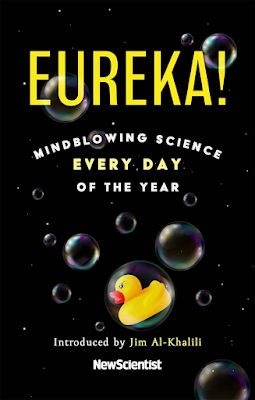
Very seldom will I devote any space to passing on merely factual information. Truth Is... is devoted to lifting up Truth, not just Facts. (You can read about that by clicking here.) But I found the following quote from New Scientist's Eureka!: Mindblowing Science Every Day of the Year completely fascinating.


"Our balance system is controlled by three senses cooperating in complex harmony. The vestibular system in our inner ear informs us about the position of our head; our eyes tell us how our body is located in relation to the external world; and proprioceptors -- recep­tors in muscles and joints -- help us to figure out how our body is positioned in space, which is particularly helpful if we cannot see. These elements mature at different rates.

"The vestibular system is fully operational by the time a child has reached 6 months of age; proprioceptors need three or four years more. The development of the visual element is complete by around 16 years of age.

"The sensation of dizziness and nausea following a spinning move­ment is similar to motion sickness -- a result of the conflicting information our brain receives from the three elements mentioned above. When our body is rotating at speed our vestibular system and proprioceptors can feel it, but our eyes can't locate the horizon. Our brain is desperately trying to resolve this conflict and, because humans are primarily visual, it assumes that the other senses are hallucinating, probably because of intoxication. So the brain tries to get rid of the assumed poison by provoking vomiting."

*  *  *  *  *  *  *

Truth is...When David wrote, in Psalm 139:14, "I praise you because I am fearfully and wonderfully made; your works are wonderful, I know that full well," he didn't know the half of it.


Thursday, December 15, 2022

You Know That Thing About Beauty Only Being Skin Deep?


So many of us care so much about whether others consider us physically attractive. "Do they think I'm good-looking?" "Is my skin smooth?"

According to The Body, by Bill Bryson, it's kind of silly to put much energy into our outward appearance.


"The skin consists of an inner layer called the dermis and an outer epidermis. The outermost surface of the epidermis, called the stratum corneum, is made up entirely of dead cells. It is an arresting thought that all that makes you lovely is deceased. Where body meets air, we are all cadavers. These outer skin cells are replaced every month. We shed skin copiously, almost carelessly: some twenty-five thousand flakes a minute, over a million pieces every hour. Run a finger along a dusty shelf, and you are in large part clearing a path through fragments of your former self. Silently and remorselessly we turn to dust."

*  *  *  *  *  *  *

Truth is...This seems to make it even more important that God doesn't concentrate on what we look like on the outside, but on who we really are in our heart of hearts. 1 Samuel 16:7  -  "The Lord doesn’t see things the way you see them. People judge by outward appearance, but the Lord looks at the heart." (NLT)

Thursday, November 17, 2022

It Doesn't HAVE To Be Science Or Faith


I recently started reading a book by a couple of Jesuit priests who work at the Vatican observatory (Guy Consolmagno and Paul Mueller). It's titled Would You Baptize an Extraterrestrial? and its first chapter gives a great analogy that explains how science and religion don't have to be at odds with each other.

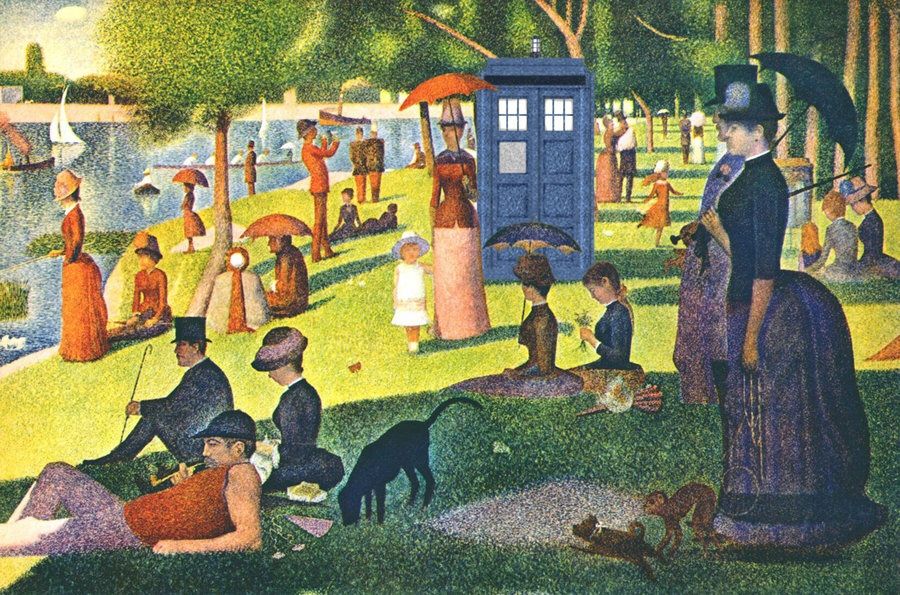
One piece of background explanation: the painting that is referenced in this quote was not painted with brushstrokes of paint, but was created using a technique called pointillism, where the image was built up by adding colors dot by dot, much like the digital imaging techniques used today.


When I look at A Sunday on La Grande Jatte  -  1884, I keep flipping back and forth between seeing the whole scene, which is lots of people enjoying a beautiful day in the park, and seeing the little dots from which that scene is made up. But to me that doesn't mean the world is falling apart  -  it means that there is more than one way to see the world. One way is to see the big picture, the everyday world of common experience. Another way is to see the world as analyzed by science: a world of tiny atoms, of particles and waves, of fields of force  -  a world that can be described mathematically.

That's one way to get at relating science and faith: think of it as flipping back and forth between two different ways of seeing one and the same world. We can see the world through the eyes of science or through the eyes of faith.

When you see the world through the eyes of faith, you are often very much concerned with everyday experiences of what is right and good and beautiful. You are concerned with how your life hangs together and makes sense  -  or doesn't!

But when you see the world through the eyes of science, your concerns are different. You want to know how the world works and what it's made of, right down to its smallest pieces. The world as analyzed by science can seem disconnected from the world of everyday experience, just as the dots in Seurat's painting can seem disconnected from the larger image.

The trick is to get comfortable with the idea of flipping back and forth between two different ways of seeing. And the trick, also, is not to panic if one way of seeing omits something that the other includes, or emphasizes something that the other neglects.

So you can see this painting as a collection of dots, or you can see it as an image of people in a park. Both descriptions are true. If one of them is true, it doesn't make the other one false.

*  *  *  *  *  *  *

Truth is...and I think I may have said this before...when presented with an either/or choice, sometimes the best option is both/and.


Tuesday, December 1, 2020

It's Safer to Have a Baby in the Czech Republic Than the U.S.


While this particular entry is more concerned with Facts than with Truth, it certainly gives me pause.


From The Body, by Bill Bryson:

"Despite its lavish spending, the United States has one of the highest rates of both infant and maternal death among industrialized nations," according to The New York Times. The average cost of childbirth in the United States is about $30,000 for a conventional birth and $50,000 for a Cesarean, about three times the cost for either in the Netherlands. Yet American women are 70 percent more likely to die in childbirth than women in Europe and about three times more likely to suffer a pregnancy-related fatality than women in Britain, Germany, Japan, or the Czech Republic. Their infants are no less at risk. One of every 233 newborn babies dies in the United States, compared with just one in 450 in France and one in 909 in Japan. Even countries like Cuba (one in 345) and Lithuania (one in 385) do much better.

The causes in America include higher rates of maternal obesity, greater use of fertility treatments (which produce more failed outcomes), and increased incidence of the rather mysterious disease known as preeclampsia.

*  *  *  *  *  *  *

Truth is...Paul Simon said it in his song, "A Simple Desultory Philippic": All of my wealth won't buy me health.


Tuesday, November 21, 2017

Healed by Faith or Medicine?


When a person goes to a doctor, is that a lack of faith in God?

You have heard it said that disease is not from God...it is a result of The Fall (Adam & Eve's/mankind's initial choice to go their OWN way instead of God's way). It is fair to assume that God's ultimate desire is for His creation to be in perfect harmony with Him and itself...for example, no disease.


And some folks believe the treatment for all disease should be, therefor, leaving it up to God to restore a person's body to perfect health.


So, is it evidence of a lack of faith when someone goes to a doctor in hopes of getting rid of a physical ailment?


I really appreciate an ancient insight I recently read, attributed to Saint Basil of Caesarea (329-379 CE), who is thought to have founded the first hospital (from The First Thousand Years, by Robert Louis Wilken):


When [Basil} was a student at Athens, he had shown particular attentiveness in the study of medicine, not only in its practical side, but also in its theory and principles. He had gained enough experience to know, as he put it in one of his letters, that incompetent physicians often make people's illnesses worse. In one of his writings on the monastic life, The Longer Rule, he addressed the question as to whether relying on the 'art of medi­cine' is in keeping with Christian piety. Medicine, he wrote, like the know-how of a farmer or the skill of a weaver, is a gift of God. Because the body is susceptible to illness, God has given human beings the skills to heal illness. 'Just as we would have no need of the labor and toil of the farmer if we were living among the delights of paradise, so we would not require the art of medicine for healing if we were immune to disease.' The work of the physician who heals bodies [swells] to the glory of God no less than the work of those who care for the soul. As the Lord used clay for healing (John 9:6), so also it is good that physicians use the things of the earth for the cure of bodily ills.


Truth is...I don't have a definitive answer to the question "Healed by Faith or Medicine?", but as is often the case when presented with an either/or concerning God, the truth probably lies closer to both/and.


Tuesday, August 25, 2015

Three-Dimensional Truth


There's no such thing as "What's true for you may not be true for me." (Well, outside the realm of things like "Dr. Pepper is the best soft drink in the world." That could definitely be true for me but not for you, but that's not what I'm talking about here...yeah, you get that.)

As I was saying, there's no such thing as "What's true for you may not be true for me," but I recently saw an illustration of why it sometimes APPEARS that there's such a thing.


It all hinges on being able to differentiate between things that are true and something that is The Truth.


Thanks go to @EarnKnowledge for tweeting this picture...beyond that, I have no clue as to its origin.


Truth is...the circus of ideologies that is social media could use a lot more humility and mutual respect as people go beyond spouting things that are true and begin to be more concerned with Truth.


Tuesday, December 23, 2014

The Big Bang In Reverse


"Singularity."

That's the term scientists use for the theorized super-dense essence of what went bang at the Big Bang. According to general relativity, the initial state of the universe, at the beginning of the Big Bang, was a singularity: a point in spacetime in which gravitational forces cause matter to have an infinite density and zero volume.


It strikes me that the first Christmas was a bit of a reverse Big Bang.


Out of all the galaxies spread out across the incomprehensively-massive universe, God seems to have focused his attention on one called the Milky Way.


From among the tens of billions of solar systems in the Milky Way, he picked one swirling around a fairly unremarkable yellow sun, as described by Douglas Adams in The Hitchhiker's Guide to the Galaxy, "far out in the uncharted backwaters of the unfashionable end of the Western Spiral arm of the [Milky Way]."


The Lord of the Universe then paid particular attention to the third planet out from that small star.


On that planet, with seven great continents to choose from, Yahweh picked out the mostly-desert land-bridge between Africa and Asia, and made it the homeland of an insignificant fellowship of twelve tribes, full of slaves and sheepherders.


Choosing one of those tribes, and one particular family line within that tribe, the God of all creation looked across the entire scope of human history - past, present, and future - and went to a young teenage girl in an insignificant village in a time of political oppression.


At that singular time, at that singular place, as part of the hopes and dreams of that singular people, the supreme being of the universe, who spoke the world and everything beyond it into existence, caused himself to become...a single...human...cell.


*  *  *  *  *  *  *

Truth is...the Lord has come; joy to the world!


Tuesday, August 7, 2012

Cure for the Blues


If you're like most people on the planet, there are times in your life when you don't feel as happy and hopeful as you would like. You take a look at yourself and don't necessarily like what you see.

Some call it "the blues," or "feeling down," or "temporary minor depressive tendencies."


There is good news, though, and it's backed up by scientific research, according to this quote from Flourish: A Visionary New Understanding of Happiness and Well-being, by Martin E. P. Seligman.

OTHER PEOPLE are the best antidote to the downs of life and the single most reliable up. ...My friend Stephen Post, professor of Medical Humanities at Stony Brook, tells a story about his mother. When he was a young boy, and his mother saw that he was in a bad mood, she would say, "Stephen, you are looking piqued. Why don't you go out and help someone?" Empirically, Ma Post's maxim has been put to rigorous test, and we scientists have found that doing a kindness produces the single most reliable momentary increase in well-being of any exercise we have tested.

An old song we used to sing in Sunday School comes to mind: "Jesus then Others then You; what a wonderful way to spell JOY."

Truth is...getting our minds off our selfish wants and focusing on helping others with their needs is bound to lighten the emotional burdens we bear.

Tuesday, May 22, 2012

"Two Lectures" by C. S. Lewis


In reading the collection of magazine articles and papers by C. S. Lewis titled God in the Dock, my brain was stimulated by the piece, “Two Lectures.”


*  *  *  *  *  *  * 

“And so,” said the lecturer, “I end where I began. Evolution, development, the slow struggle upwards and onwards from crude and inchoate beginnings towards ever-increasing perfection and elaboration – that appears to be the very formula of the whole universe.

“We see it exemplified in everything we study. The oak comes from the acorn. The giant express engine of today comes from the Rocket. The highest achievements of contemporary art are in a continuous line of descent from the rude scratching with which prehistoric man adorned the wall of his cave.

“What are the ethics and philosophy of civilized man but an elaboration of the most primitive instincts and savage taboos? Each one of us has grown, through slow pre-natal stages in which we were at first more like fish than mammals, from a particle of matter too small to be seen. Man himself springs from beasts: the organic from the inorganic. Development is the key word. The march of all things is from lower to higher.”

None of this, of course, was new to me or to anyone else in the audience. But it was put very well (much better than it appears in my reproduction) and the whole voice and figure of the lecturer were impressive. At least they must have impressed me, for otherwise I cannot account for the curious dream I had that night.

I dreamed that I was still at the lecture, and the voice from the platform was still going on. But it was saying all the wrong things. At least it may have been saying the right things up to the very moment at which I began attending; but it certainly began going wrong after that. What I remembered on waking went like this: “…appears to be the very formula of the whole universe. We see it exemplified in everything we study. The acorn comes from a full-grown oak. The first crude engine, the Rocket, comes, not from a still cruder engine, but from something much more perfect than itself and much more complex, the mind of a man, and a man of genius. The first prehistoric drawings come, not from earlier scratchings, but from the hand and brain of human beings whose hand and brain cannot be shown to have been in any way inferior to our own; and indeed it is obvious that the man who first conceived the idea of making a picture must have been a greater genius than any of the artists who have succeeded him. The embryo with which the life of each one of us began did not originate from something even more embryonic; it originated from two fully-developed human beings, our parents. Descent, downward movement, is the key word. The march of all things is from higher to lower. The rude and imperfect thing always springs from something perfect and developed.”

I did not think much of this while I was shaving, but it so happened that I had no 10 o’clock pupil that morning, and when I had finished answering my letters I sat down and reflected on my dream.

It appeared to me that the Dream Lecturer had a good deal to be said for him. It is true that we do see all round us things growing up to perfection from small and rude beginnings; but then it is equally true that the small and rude beginnings themselves always come from some full-grown and developed thing. All adults were once babies, true: but then all babies were begotten and born by adults. Corn does come from seed: but then seed comes from corn. I could even give the Dream Lecturer an example he had missed. All civilizations grow from small beginnings; but when you look into it you always find that those small beginnings themselves have been “dropped” (as an oak drops an acorn) by some other and mature civilization. The weapons and even the cookery of old Germanic barbarism are, so to speak, driftwood from the wrecked ship of Roman civilization. The starting point of Greek culture is the remains of older Minoan cultures, supplemented by oddments from civilized Egypt and Phoenicia.

But in that case, thought I, what about the first civilization of all? As soon as I asked this question I realized that the Dream Lecturer had been choosing his examples rather cautiously. He had talked only about things we can see going on around us. He had kept off the subject of absolute beginnings. He had quite correctly pointed out that in the present, and in the historical past, we see imperfect life coming from perfect just as much as vice versa. But he hadn’t even attempted to answer the Real Lecturer about the beginnings of all life. The Real Lecturer’s view was that when you got back far enough – back into those parts of the past which we know less about – you would find an absolute beginning, and it would be something small and imperfect.

That was a point in favor of the Real Lecturer. He at least had a theory about the absolute beginning, whereas the Dream Lecturer had slurred it over. But hadn’t the Real Lecturer done a little slurring, too? He had not given us a hint that his theory of the ultimate origins involved us in believing that Nature’s habits have, since those days, altered completely. Her present habits show us an endless cycle – the bird coming from the egg and the egg from the bird. But he asked us to believe that the whole thing started with an egg which had been preceded by no bird. Perhaps it did. But the whole audience accepted it as something natural and obvious – depended on his slurring over the immense difference between this and the processes we actually observe. He put it over by drawing our attention to the fact that eggs develop into birds and making us forget that birds lay eggs; indeed, we have been trained to do this all our lives: trained to look at the universe with one eye shut. “Developmentalism” is made to look plausible by a kind of trick.

For the first time in my life I began to look at the question with both eyes open. In the world I know, the perfect produces the imperfect, which again becomes perfect – egg leads to bird and bird to egg – in endless succession. If there ever was a life which sprang of its own accord out of a purely inorganic universe, or a civilization which raised itself by its own shoulder-straps out of pure savagery, then this event was totally unlike the beginnings of every subsequent life and every subsequent civilization. The thing may have happened; but all its plausibility is gone. On any view, the first beginning must have been outside the ordinary processes of nature. An egg which came from no bird is no more “natural” than a bird which had existed from all eternity. And since the egg-bird-egg sequence leads us to no plausible beginning, is it not reasonable to look for the real origin somewhere outside sequence altogether? You have to go outside the sequence of engines, into the world of men, to find the real originator of the Rocket. Is it not equally reasonable to look outside Nature for the real Originator of the natural order?

*  *  *  *  *  *  *

Truth is...By posting this piece, I am not at all pretending to Make The Case, once and for all, of Creation over Evolution. Rather it is meant to simply suggest that logic and reason do not necessarily rule out the concept of a non-natural creator. There is reason to doubt on both sides of the fence.


Tuesday, May 1, 2012

Come to the Dark Side


It's always a dicey thing to try to simplify a complex scientific idea, but here's my roll of the dice on the subject of dark matter.


With the given that stuff in the universe is held in proximity to other stuff by the force of gravity - a force inherit in all stuff - scientists have been scratching their collective heads for a while because there appears to be more gravity than can be explained by the amount of stuff.


A quote from schools-wikipedia.org:


The first to provide evidence and infer the existence of a phenomenon that has come to be called "dark matter" was Swiss astrophysicist Fritz Zwicky, of the California Institute of Technology (Caltech) in 1933. He applied the virial theorem to the Coma cluster of galaxies and obtained evidence of unseen mass. Zwicky estimated the cluster's total mass based on the motions of galaxies near its edge. When he compared this mass estimate to one based on the number of galaxies and total brightness of the cluster, he found that there was about 400 times more mass than expected. The gravity of the visible galaxies in the cluster would be far too small for such fast orbits, so something extra was required. This is known as the "missing mass problem". Based on these conclusions, Zwicky inferred that there must be some non-visible form of matter which would provide enough of the mass and gravity to hold the cluster together.


Translation: We can't explain why the universe doesn't just blow apart. There isn't anything natural/physical there that we can detect, so for now, let's call it "dark matter" and say that we haven't found a way to determine exactly what it is...but we can see its effect in the gravitational forces that are evident.


Okay...I read all that...then I turn to Colossians 1:17...


"[Jesus] is before all things, and in him all things hold together."


Truth is...I think maybe the Apostle Paul has had the answer all along.